


Blog Details
Laminated foil is a multilayer composite material designed to combine the barrier properties of aluminum foil with the strength, flexibility, sealing performance, or processing characteristics of other materials. Depending on the application, aluminum foil can be laminated with PET, PE, CPP, PA, paper, nonwoven fabric, or other functional layers.
This combination allows laminated foil to be engineered for different requirements, including moisture and oxygen protection, light blocking, mechanical strength, heat sealing, thermal reflection, and industrial protection.
Today, laminated foil is used across flexible packaging, industrial packaging, insulation, cold-chain transportation, and other applications where a single material cannot provide all the required properties.
Explore Foilexpert's laminated film products
What Is Laminated Foil?
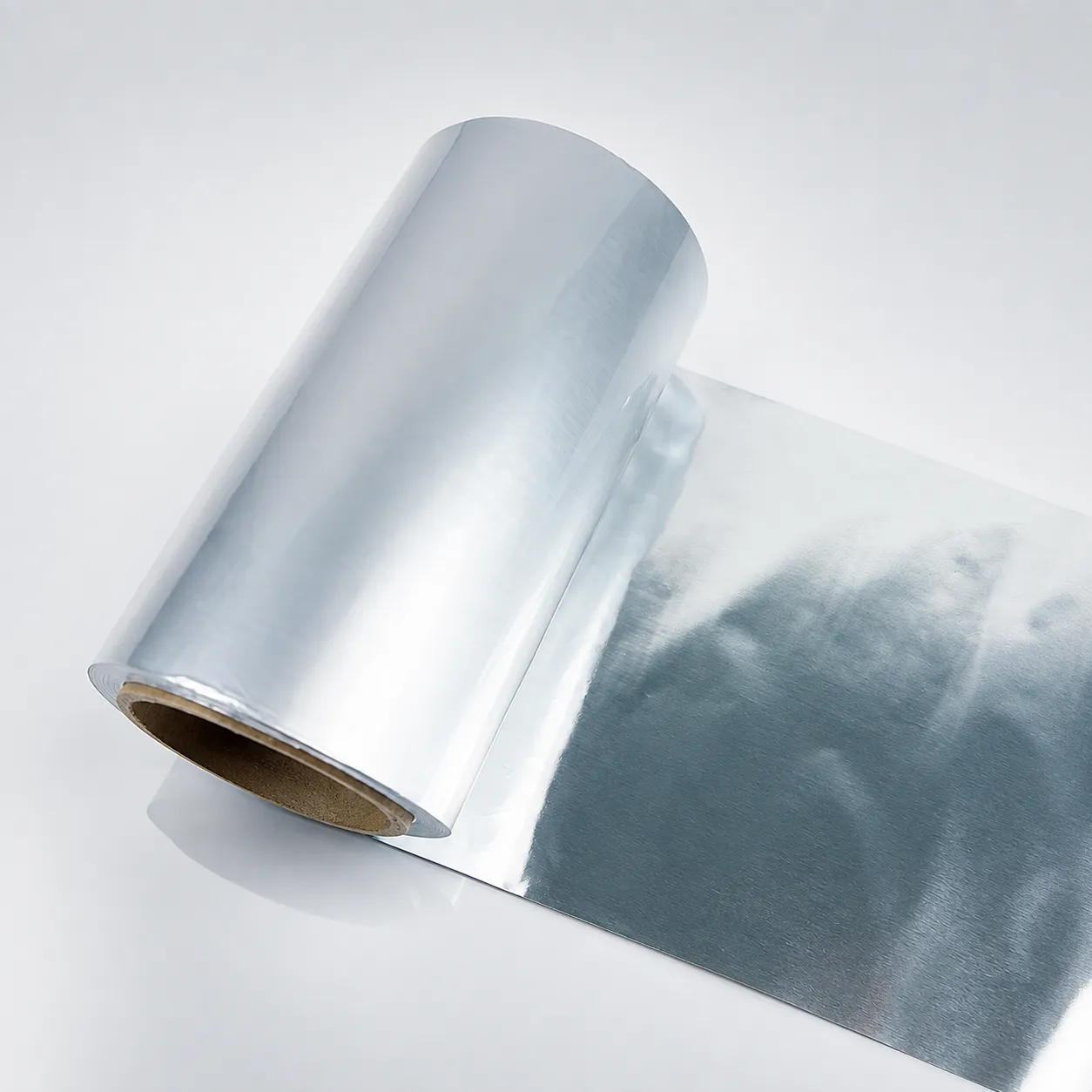
Laminated foil is a composite material made by bonding aluminum foil with one or more additional layers. Instead of relying on aluminum foil as a standalone material, lamination adds functional layers that improve the material's overall performance and make it suitable for specific converting and end-use requirements.
A typical structure may contain:
PET / AL / PE
Each layer performs a different function:
PET: Provides mechanical strength, dimensional stability and a suitable surface for printing.
AL: Provides high barrier protection against light, moisture and oxygen.
PE: Provides flexibility and heat-sealing capability.
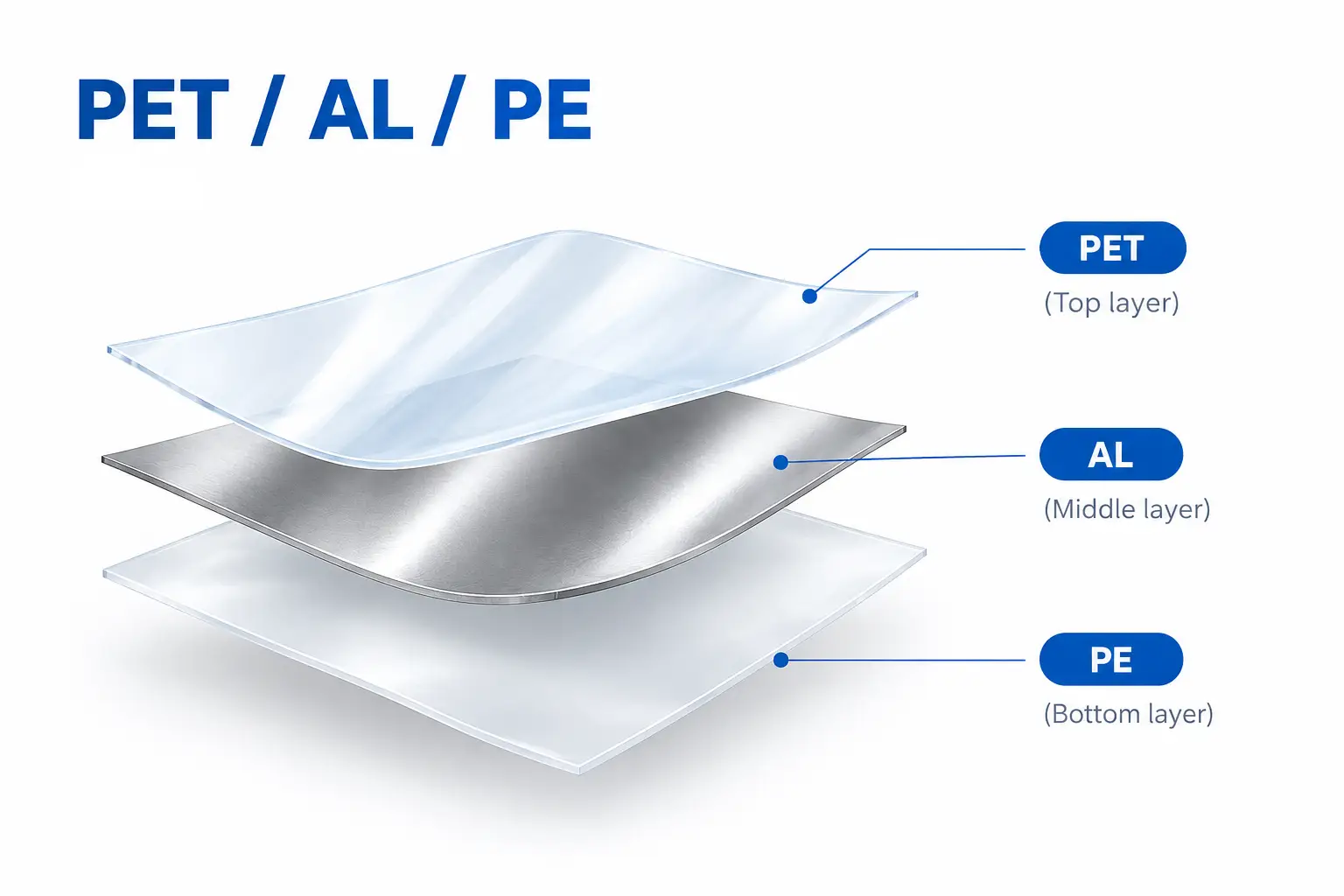
Other structures can include PET / AL / CPP, PET / AL / PA / PE, or Paper / AL / PE, depending on the intended application.
Foilexpert's current product range includes aluminum laminated film, aluminum foil laminated paper, plastic laminated film, printed laminated film and nonwoven fabric laminated foil.
Why Is Aluminum Foil Laminated?
Aluminum foil provides excellent barrier protection, but its performance as a standalone material can be limited by mechanical and processing requirements.
Lamination allows manufacturers to combine the properties of different materials within a single structure.
Improved Mechanical Strength
Polymer or paper layers can provide additional tensile strength, flexibility and resistance to handling damage.
This is particularly important when the finished material needs to be converted, transported, folded, formed or processed on packaging equipment.
Better Heat-Sealing Performance
Aluminum foil itself is not a heat-sealing layer. By adding PE or CPP, the laminate can be designed for heat sealing and pouch or bag production.
Better Surface Protection
A polymer or paper outer layer can help protect the aluminum layer during handling and converting while also providing a suitable surface for printing or further processing.
Application-Specific Performance
The structure can be adjusted according to the application. For example, a packaging laminate may prioritize barrier and sealing performance, while an insulation-facing material may prioritize reflectivity, moisture protection and flexibility.
This application-based approach is one of the main advantages of laminated foil over a single-layer material.
Common Laminated Foil Structures
There is no single laminated foil structure suitable for every application. The material combination is normally selected according to barrier requirements, mechanical performance, sealing requirements and the converting process.
PET / Aluminum Foil / PE
PET / AL / PE is one of the most widely used structures for flexible laminated film applications.
The PET layer provides strength and dimensional stability, aluminum foil provides the main barrier layer, and PE provides flexibility and heat sealing.
This structure can be used for packaging applications where barrier protection and sealing performance are both important.
View Foilexpert's PET/Aluminum laminated film products
PET / Aluminum Foil / CPP
CPP can be selected as the sealing layer when the finished laminate requires specific heat-sealing and converting characteristics.
The structure is suitable for applications where the aluminum layer provides barrier protection while the polymer layers improve processability.
PET / Aluminum Foil / PA / PE
Adding PA can improve mechanical performance and puncture resistance.
This type of multilayer construction can be considered when the packaging or industrial application requires additional durability during transportation and handling.
Aluminum Foil Laminated Paper
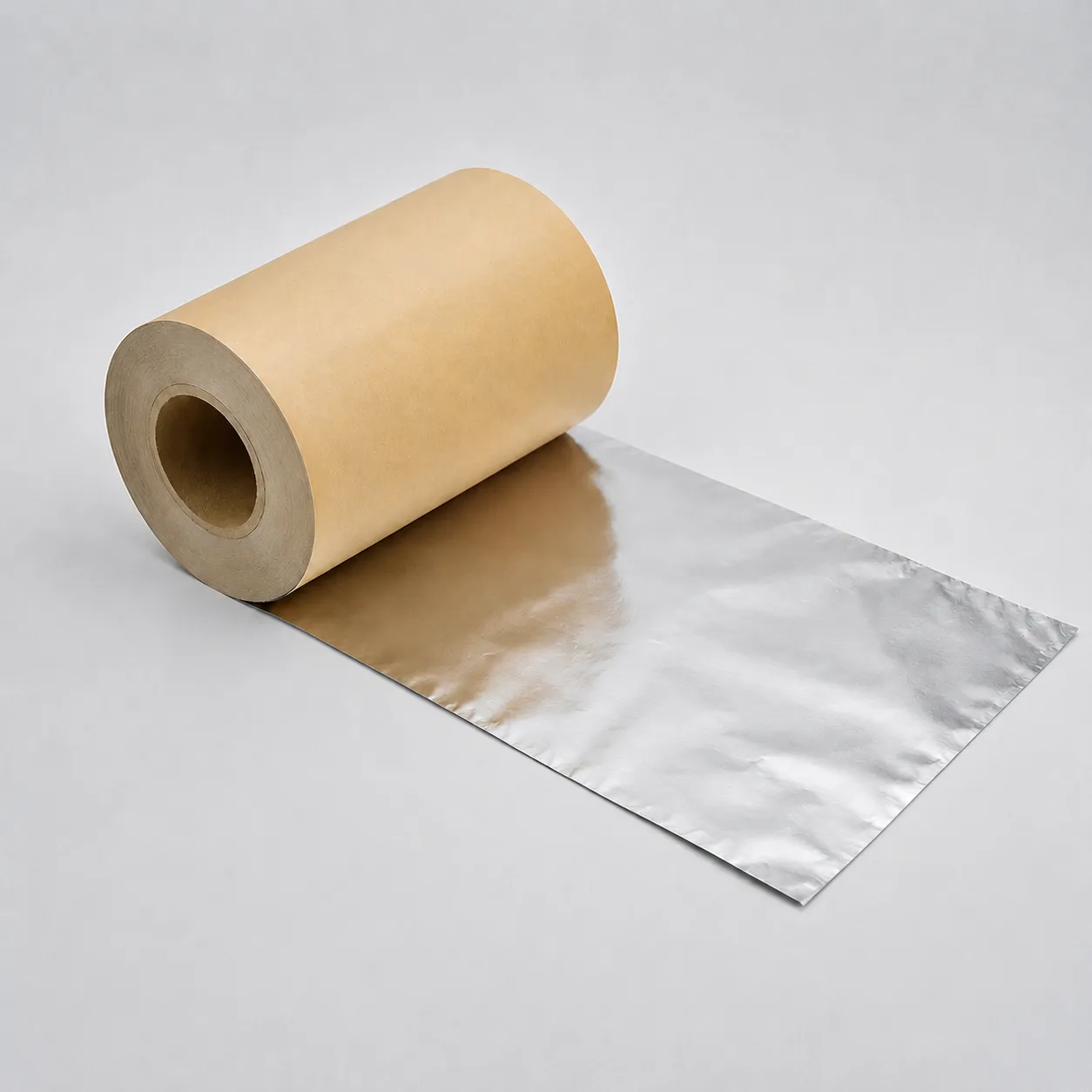
Paper can be combined with aluminum foil to provide a different balance of rigidity, printability and barrier performance.
Foilexpert offers Aluminum Foil Laminated Paper as part of its laminated material product range. Foil Expert
Learn more about Aluminum Foil Laminated Paper
Key Benefits of Laminated Foil
The performance of laminated foil depends on its material structure, but several advantages make it suitable for demanding packaging and industrial applications.
High Barrier Protection
The aluminum layer provides strong protection against light, moisture and oxygen. In a multilayer structure, the surrounding materials can also help protect the foil from mechanical damage during processing and use.
Mechanical Durability
Polymer, paper or reinforcement layers can improve tensile strength, tear resistance, puncture resistance and handling performance.
This makes laminated structures more suitable for finished packaging and industrial products than bare foil in many applications.
Heat-Sealing Capability
When PE or CPP is incorporated into the structure, the laminate can be designed for heat sealing.
This is particularly important for pouches, bags and other flexible packaging formats.
Printing and Surface Compatibility
PET and paper can provide suitable surfaces for printing, branding and additional surface treatment.
For applications requiring printed graphics, the laminate structure can therefore be designed around both visual requirements and functional performance.
Customizable Construction
One of the biggest advantages of laminated foil is that the material structure can be engineered according to the end application.
Foilexpert currently states that its customized laminated structures can use combinations including PET, VMPET, AL, PE, CPP and PA, with customization available for thickness, roll width, roll length, coating, barrier performance and mechanical properties.
Explore Foilexpert's customized laminated film solutions
Laminated Foil Applications
Laminated foil is used in applications where barrier protection needs to be combined with mechanical, sealing, thermal or processing performance.
Flexible Packaging
Laminated foil is widely used in flexible packaging because multilayer structures can combine barrier protection with heat sealing, printability and mechanical strength.
Depending on the product being packaged, structures may be designed around PET, aluminum foil, PE, CPP or PA.
For manufacturers that need a specific combination of barrier, sealing and mechanical properties, custom lamination can provide greater flexibility than selecting a standard single-layer material.
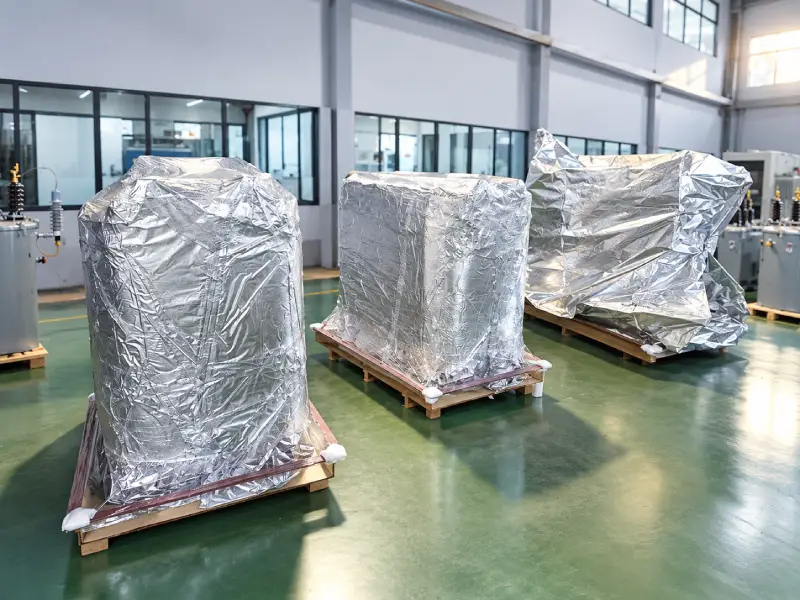
Industrial Packaging
Industrial products may require protection from moisture, dust, oxygen, light and handling conditions during storage and transportation.
Laminated film structures can be designed according to the product, packaging equipment, transportation environment and required protection level.
Foilexpert's industrial packaging solutions support customized film structures, thicknesses, roll dimensions, barrier performance and mechanical properties.
Insulation and HVAC Applications
Aluminum-based laminated materials are also used in thermal insulation systems where reflective surfaces, moisture protection and flexibility are required.
For example, aluminum foil nonwoven materials can be used as protective layers for glass wool, rock wool and PU foam, as well as vapor-barrier facing in air-conditioning ductwork and hot and cold rooms.
Cold Chain and Thermal Protection
Laminated and reflective film structures can also be incorporated into thermal protection systems for temperature-sensitive products.
Depending on the design, reflective layers can help reduce radiant heat transfer, while additional polymer or bubble layers provide insulation and physical protection.
Foilexpert currently provides solutions for Thermal Liner, Pallet Cover, and Flexitank Container applications.
Laminated Foil vs. Metallized Film
Laminated foil and metallized film can both be used to create barrier structures, but they are not the same material. Laminated foil uses actual aluminum foil as a layer within the composite structure. Metallized film uses a very thin aluminum coating deposited onto a polymer substrate.
Metallized films can provide a lightweight alternative for applications where the required barrier level can be achieved without a full aluminum foil layer.
For applications requiring the higher barrier characteristics associated with an aluminum foil layer, a foil-based laminate may be more appropriate.
For applications where weight, flexibility, processing efficiency and barrier performance need to be balanced, metallized film can be considered as an alternative.
The correct choice should therefore be based on the required barrier level, mechanical performance, processing conditions and final application rather than material name alone.
How to Choose the Right Laminated Foil
Selecting a laminated foil structure should start with the application rather than simply choosing the thickest or strongest material.
1. Define the Required Barrier Performance
Determine whether the application requires protection against:
Moisture
Oxygen
Light
Water vapor
Contamination
The required barrier level will influence whether aluminum foil, metallized film or another barrier layer is appropriate.
2. Consider Mechanical Requirements
For applications involving transportation, folding, puncture risk or heavy handling, consider tensile strength, tear resistance, puncture resistance and flex durability.
3. Determine the Sealing Requirements
If the finished product needs to be heat sealed, the inner layer must be selected according to the sealing process and required sealing strength.
PE and CPP are common options for sealing layers.
4. Match the Film to the Processing Equipment
Roll width, thickness, roll length and surface properties should be compatible with the customer's converting and packaging equipment.
Foilexpert supports customization of film structure, thickness, roll width and length, PE coating, surface treatment and packaging format.
5. Consider the End-Use Environment
A material designed for flexible packaging may have very different requirements from one designed for HVAC insulation, cold-chain protection or industrial export packaging.
For this reason, application-specific material selection is generally more effective than using a single standard laminate for every purpose.
Alternatively, you can directly contact the professional manufacturer, FoilExpert, to obtain a customized solution for your application.
Why Work With a Custom Laminated Foil Manufacturer?
For industrial buyers, the right laminated foil is not simply a matter of selecting an existing film specification.
The structure needs to match the application, converting process and required performance.
Foilexpert provides customized laminated film structures using materials including PET, VMPET, aluminum foil, PE, CPP, PA, paper and nonwoven fabrics. Specifications such as thickness, roll width, roll length, PE coating, barrier performance, mechanical properties and surface treatment can be adjusted according to application requirements.
The company's current product range covers aluminum laminated film, aluminum foil laminated paper, plastic laminated film, printed laminated film and nonwoven fabric laminated foil.
Frequently Asked Questions About Laminated Foil
What is laminated foil used for?
Laminated foil is used in flexible packaging, industrial packaging, insulation, cold-chain protection and other applications that require a combination of barrier protection and additional mechanical or processing properties.
What materials can be laminated with aluminum foil?
Common materials include PET, PE, CPP, PA, paper and nonwoven fabrics. The appropriate combination depends on the required barrier, strength, sealing and application performance.
Is laminated foil heat sealable?
It can be. Aluminum foil itself is not a heat-sealing layer, but structures incorporating PE or CPP can provide heat-sealing functionality.
What is the difference between laminated foil and aluminum foil?
Aluminum foil is a single aluminum layer, while laminated foil combines aluminum foil with other functional materials. The additional layers can improve strength, sealing, printability and processing performance.
Can laminated foil be customized?
Yes. Laminated foil can be customized in terms of material structure, thickness, width, roll length, sealing layer, barrier performance and surface treatment according to the intended application.
How do I choose the right laminated foil?
Start with the required barrier performance, mechanical strength, sealing requirements, processing equipment and end-use environment. A custom manufacturer can then help determine the appropriate multilayer structure.
Conclusion
Laminated foil provides a flexible way to combine aluminum foil's barrier properties with the mechanical, sealing and processing characteristics of polymers, paper and reinforcement materials.
The right structure depends on the application. Flexible packaging may require a PET / AL / PE or PET / AL / CPP structure, while insulation, cold-chain protection and industrial packaging may require different combinations of aluminum foil, polymer, nonwoven or insulating layers.
For manufacturers and distributors looking for a custom laminated foil supplier, Foilexpert provides application-oriented material solutions with customized structures and specifications.
Related Blogs
-
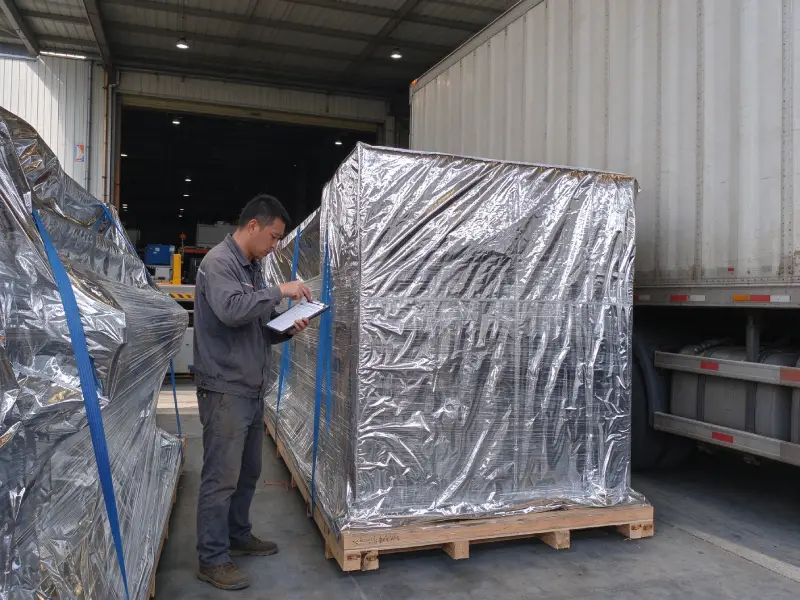 Explore aluminum foil vacuum packaging film for industrial machinery and heavy equipment. Pengyuan offers customized materials for aluminium vacuum packing, with flexible structures, thicknesses and roll widths.blog
-
 This guide explains the key factors affecting barrier performance, how OTR and WVTR are measured, and how to choose the right laminated film for different packaging applications.
blog -
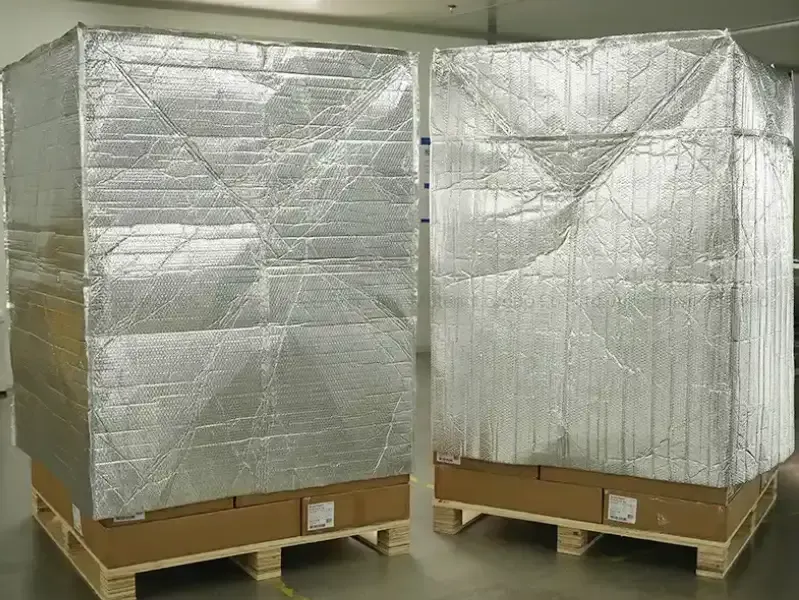 Learn how to choose industrial laminated film for packaging based on barrier performance, puncture resistance, thickness, and converting requirements. Explore material options and custom solutions for industrial applications with Foilexpert.blog
Keep in touch with us
If you have any questions or needs about our products or services, please feel free to contact us at any time. We look forward to working with you and providing you with the best packaging solutions.
Mob:+86-15925678602
E-mail:info@pengyuangroup.com