


Blog Details
Industrial packaging must do more than contain a product. It may need to resist moisture, protect against oxygen exposure, withstand punctures during handling, or maintain reliable seals throughout storage and transportation. Choosing the right industrial laminated film requires a clear understanding of the product being packaged, the environmental conditions it will encounter, and the converting processes used to manufacture the final packaging.

Laminated films combine different materials to achieve a balance of barrier performance, mechanical strength, flexibility, and processability. However, no single film construction is suitable for every industrial application. The most effective solution depends on the specific protection requirements and the practical demands of the packaging operation.
This guide explains the key factors to consider when selecting industrial packaging film, how different film types serve different applications, and what technical information buyers should provide when requesting a quotation from a laminated film supplier.
1. Understand Your Industrial Packaging Requirements
Before comparing materials, define what the packaging needs to protect and how it will be used. Industrial packaging applications vary considerably, from protective liners for bulk liquids to barrier packaging for moisture-sensitive materials and laminated films used in insulation systems.
Start by identifying the following requirements:
● Product characteristics: Determine whether the packaged material is a liquid, powder, granule, solid component, or another industrial product. Consider chemical compatibility, sharp edges, sensitivity to moisture, and oxygen exposure.
● Storage and transportation conditions: Evaluate temperature variations, humidity, outdoor exposure, stacking pressure, and the distance the package must travel.
● Handling requirements: Consider filling, lifting, loading, unloading, palletizing, and the potential for abrasion or impact during transportation.
● Packaging format: Identify whether the film will be converted into bags, liners, covers, rolls, pouches, or another finished product.
● Processing conditions: Review the equipment and manufacturing processes involved, including lamination, coating, printing, slitting, and heat sealing.
These requirements help establish the performance criteria that a laminated film must meet. They also prevent buyers from specifying unnecessary material features that increase cost without improving the actual packaging performance.

2. Key Factors in Industrial Laminated Film Selection
Industrial packaging material selection involves more than choosing a substrate or specifying a total thickness. The performance of a laminated film depends on the properties of its individual layers, the compatibility between materials, and the quality of the lamination process.
Five factors deserve particular attention.
2.1 Moisture and Oxygen Barrier
Moisture and oxygen can affect the stability, quality, or usability of many industrial materials. A packaging film must provide an appropriate level of barrier protection for the product and its storage conditions.
2.2 Puncture and Tear Resistance
Packaging may encounter sharp edges, rough surfaces, repeated handling, or mechanical stress during transportation. The film must have sufficient resistance to prevent damage under these conditions.
2.3 Thickness and Mechanical Strength
Film thickness influences material consumption, flexibility, stiffness, and handling characteristics. However, increasing thickness alone does not guarantee better overall performance. Material selection and layer construction are equally important.
2.4 Sealing and Converting Requirements
The film must be compatible with the equipment and processes used to produce the final package. Sealability, dimensional stability, surface properties, and bonding performance can all affect production efficiency.
2.5 Cost and Supply Consistency
Buyers should evaluate the total cost of the packaging material in relation to its required performance. Stable specifications, consistent roll quality, and suitability for downstream processing are important considerations for repeat industrial orders.
The objective is to identify a film construction that meets the required performance criteria without unnecessary material complexity.
3. Evaluate Moisture and Oxygen Barrier Performance
Barrier performance is one of the most important considerations when selecting industrial packaging film, particularly for products that are sensitive to humidity, oxidation, or environmental exposure.
Moisture Barrier
Water vapor can penetrate packaging materials and affect moisture-sensitive products. The required moisture barrier depends on the product's sensitivity, the intended storage period, and the environmental conditions.
For applications requiring enhanced moisture protection, buyers may consider metallized films, polymer films with functional coatings, or aluminum foil laminates. Their suitability depends on the specific material construction, thickness, and expected operating conditions.
Oxygen Barrier
Oxygen transmission can contribute to oxidation, discoloration, or changes in product properties. If oxygen exposure is a concern, the film should be selected according to the required oxygen transmission rate (OTR).
Material composition plays a significant role in determining barrier performance. Aluminum foil laminates can provide a strong barrier when the foil layer remains intact, while metallized and coated films offer alternative constructions for applications with different performance and processing requirements.
How to Compare Barrier Specifications
Two commonly used measurements are:
● Water Vapor Transmission Rate (WVTR): Measures the amount of water vapor passing through a material under specified test conditions.
● Oxygen Transmission Rate (OTR): Measures the amount of oxygen passing through a material under specified test conditions.

Lower WVTR and OTR values generally indicate better barrier performance. However, results should only be compared when the test methods, temperature, humidity, and other relevant conditions are consistent.
For industrial buyers, the required barrier level should be established before selecting a material. Excessively high barrier performance may add cost without delivering a meaningful benefit for applications that do not require it.
For applications requiring strong barrier protection, explore Pengyuan's High Barrier Aluminum Laminated Film to evaluate a suitable material option for your packaging requirements.
4. Assess Puncture and Tear Resistance
Industrial packaging often faces mechanical stress that cannot be evaluated by barrier performance alone. A film that provides excellent moisture protection may still be unsuitable if it tears easily during filling, loading, or transportation.
Puncture resistance describes a material's ability to withstand penetration by a concentrated force. Tear resistance describes its ability to resist the initiation or propagation of a tear.
Both properties are relevant to packaging exposed to sharp-edged components, abrasive surfaces, heavy loads, or repeated handling.
When evaluating puncture and tear resistance, consider the following factors:
● Material selection: Different polymers and reinforcement materials offer different combinations of toughness, flexibility, and strength.
● Layer construction: A multilayer structure can combine the functions of different materials, allowing barrier and mechanical requirements to be addressed together.
● Film thickness: Thickness can influence resistance to penetration and damage, but the improvement depends on the material and construction.
● Lamination quality: Poor bonding or defects between layers may affect the durability of the finished material.
● Package design: Seams, corners, folds, and stress concentration points can become failure locations even when the film itself performs adequately.

For applications involving demanding mechanical requirements, Pengyuan's Puncture Resistant Vacuum Packaging Film is a relevant product to review. The final specification should be confirmed against the packaged product, handling conditions, and required performance tests.
5. Choose the Appropriate Thickness and Mechanical Strength
Thickness is a basic but important parameter in industrial laminated film procurement. It affects material weight, flexibility, stiffness, handling, and processing behavior.
However, there is no universal thickness suitable for every industrial packaging application. The appropriate specification depends on the film construction and the stresses the material must withstand.
What Determines the Required Thickness?
Application and load conditions: Films used for heavy-duty liners or protective packaging may require a different thickness from films designed for lightweight protective layers.
Material properties: Two films with the same nominal thickness may have different tensile strength, elongation, puncture resistance, and flexibility because their material compositions differ.
Lamination structure: The thickness of each layer contributes to the total gauge and influences the final material properties. Buyers should distinguish between the total laminated thickness and the thickness of an individual layer.
Processing equipment: Excessively thick or stiff film may not run properly on equipment designed for a different material range. Film flexibility and dimensional stability can also affect feeding, winding, and sealing.
Transportation and handling: The packaging must withstand the mechanical conditions expected during filling, stacking, lifting, and distribution.
6. Confirm Sealing and Converting Requirements
A laminated film must work with the manufacturing processes used to convert it into the final packaging product. Material selection should therefore account for both end-use performance and production compatibility.
Heat Sealing
For packaging that requires heat-sealed seams, the sealing layer must be compatible with the intended sealing process. Relevant parameters include sealing temperature, pressure, dwell time, and the required seal strength.
The presence of a sealable polymer layer does not automatically guarantee reliable sealing. Actual performance depends on the material construction, equipment settings, and package design.
Lamination and Bonding
For multilayer materials, the bonding between layers is essential to overall integrity. Delamination can affect appearance, durability, and functional performance. Buyers should specify any relevant requirements for bond strength and resistance to the conditions encountered during use.
Printing and Surface Treatment
Printed packaging and certain downstream processes may require specific surface properties. Depending on the material and process, surface treatment, coating compatibility, and ink adhesion may need to be evaluated before production.
Slitting and Roll Specifications
Roll width, roll length, core diameter, winding direction, and roll weight can affect compatibility with converting equipment. These details should be confirmed before ordering, especially when the material will run on automated production lines.
For industrial buyers, the most suitable film is not necessarily the one with the highest individual material performance. It is the one that provides the required protection while remaining compatible with the actual production process.
7. Match Film Types to Different Industrial Applications
Different industrial packaging applications require different combinations of barrier performance, strength, flexibility, and environmental protection. The following comparison provides a starting point for material selection.
Film type or construction | Key characteristics | Potential applications |
Aluminum foil laminated film | High barrier potential when the foil layer remains intact; can provide protection against moisture, oxygen, and light | Barrier packaging, insulation facings, and protective laminates |
Metallized film laminate | Reflective surface and barrier properties that depend on the substrate, metallization quality, and complete structure | Flexible packaging and selected protective or reflective applications |
Polymer-based laminated film | Flexible material combinations with properties tailored through polymer selection and layer design | Industrial bags, protective packaging, and converted film products |
Puncture-resistant laminate | Designed to improve resistance to penetration and mechanical damage through material and structure selection | Packaging for products with demanding handling requirements |
Flexitank materials | Designed for use in bulk-liquid transportation systems, with performance dependent on the complete flexitank construction | Bulk liquid transport in suitable shipping containers |
Thermal liner materials | Selected to help manage heat transfer and protect cargo from external temperature conditions | Container liners and temperature-sensitive cargo protection |
Bulk Liquid Transportation
Bulk liquid transportation requires materials compatible with the liquid being carried and the demands of loading, transport, and discharge. The complete system must also account for seams, fittings, installation, and the intended operating conditions.

Thermal Protection During Transportation
For cargo exposed to temperature fluctuations during storage or transit, a thermal liner may help reduce heat transfer between the cargo and the surrounding environment. The required solution depends on the cargo, transport duration, ambient conditions, and the expected level of thermal protection.

8. Consider Customization Options for Industrial Buyers
Standard film specifications may not meet every industrial application's requirements. Custom laminated film allows buyers to define material properties and roll specifications around their product, equipment, and operating conditions.
Depending on the product range and manufacturing capabilities of the supplier, customization may include:
● Material selection: Choosing suitable substrates, barrier layers, polymers, or functional coatings.
● Total thickness: Defining the overall gauge and any applicable tolerance.
● Roll width and length: Matching material dimensions to converting equipment and production requirements.
● Surface requirements: Specifying printing, surface treatment, or other functional finishing requirements where available.
● Lamination structure: Selecting a suitable combination of materials to balance barrier performance, mechanical strength, flexibility, and processing needs.
● Application-specific performance: Establishing measurable requirements for barrier properties, puncture resistance, bond strength, or sealing performance.
Request a Laminated Film Solution from Pengyuan
Pengyuan supplies laminated film products for industrial packaging and related applications. If you are evaluating a new material or looking for a suitable alternative to your current packaging film, share your technical requirements with our team.
To help us assess your project, please include the intended application, required thickness, roll width, roll length, preferred material or structure (if known), and any specific barrier, mechanical, or converting requirements.
Contact Pengyuan to discuss your industrial laminated film requirements and request a quotation for your application.
Related Blogs
-
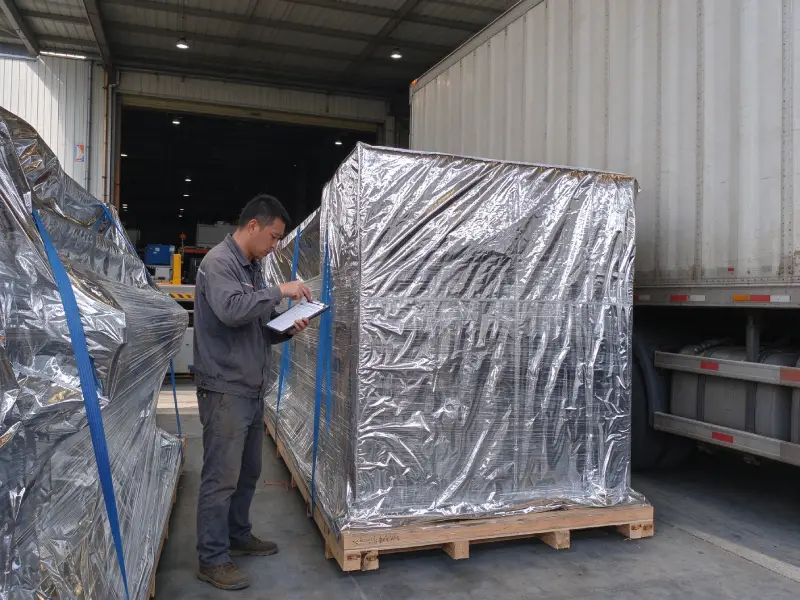 Explore aluminum foil vacuum packaging film for industrial machinery and heavy equipment. Pengyuan offers customized materials for aluminium vacuum packing, with flexible structures, thicknesses and roll widths.blog
-
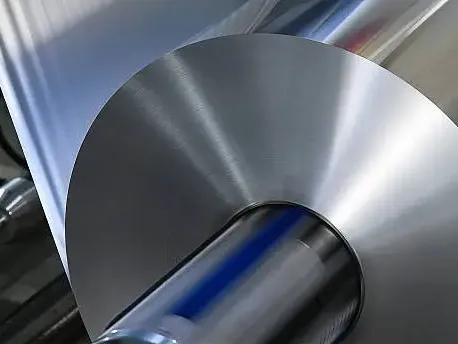 This guide explains the key factors affecting barrier performance, how OTR and WVTR are measured, and how to choose the right laminated film for different packaging applications.
blog -
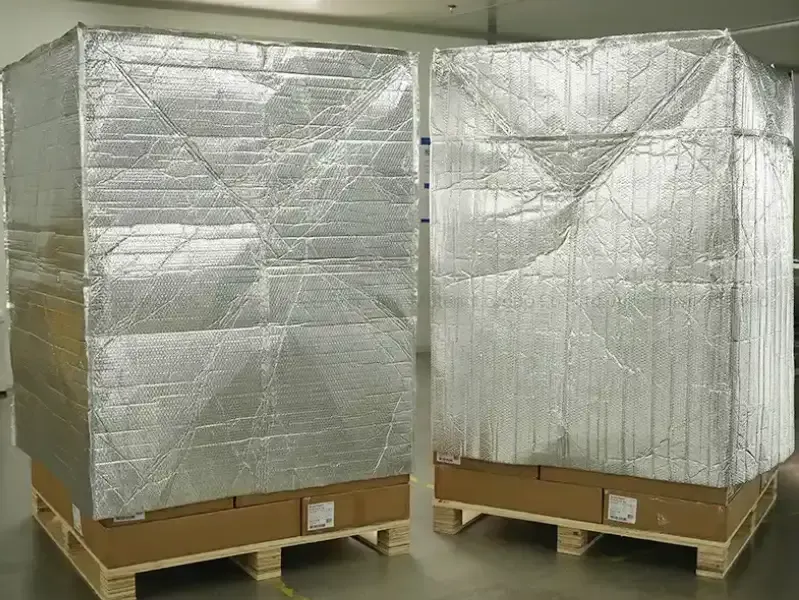 Learn how to choose industrial laminated film for packaging based on barrier performance, puncture resistance, thickness, and converting requirements. Explore material options and custom solutions for industrial applications with Foilexpert.blog
Keep in touch with us
If you have any questions or needs about our products or services, please feel free to contact us at any time. We look forward to working with you and providing you with the best packaging solutions.
Mob:+86-15925678602
E-mail:info@pengyuangroup.com